Best Performance Management Tools for AI-Generated Performance Review Templates in 2026
Your performance review templates are probably generic, repetitive, and missing the context your team actually works in. Many platforms promise AI-generated reviews but deliver vague paragraphs that managers rewrite anyway. By the end of this article, you will know the specific criteria that separate useful AI review tools from superficial ones, plus a clear #1 pick that fits most teams. You will also get a straightforward comparison of HeyRamp and Effy AI, and a practical framework for choosing between them based on your team size, review cadence, and existing HR stack.
This guide cuts through the marketing noise and focuses on what actually matters: template quality, integration depth, and whether the AI output is editable enough to feel human. You will walk away ready to make a purchase decision today.
What to Look For in AI-Generated Performance Review Tools
When evaluating AI-generated performance review tools, focus on features that directly impact review quality, fairness, and integration with your existing HR stack. The right platform should reduce administrative burden while improving the substance of every review cycle.
Start with the quality of the feedback generation AI itself. The natural language generation must produce specific, actionable comments rather than generic praise. Test whether the tool references actual employee behaviors, project outcomes, and skill demonstrations from your data.
Bias mitigation algorithms are equally critical. The best tools actively flag potentially biased language, compare ratings across demographic groups, and suggest more neutral phrasing. This protects both employees and your organization from unfair evaluation practices.
Template customization matters more than most buyers realize. Your competency frameworks, values, and role definitions are unique. A tool that forces generic categories will produce generic reviews that your managers will resist using.
Integration with your HRIS determines whether the tool becomes daily workflow or abandoned software. The AI performance review system should pull employee data, goals, and historical reviews automatically. Manual data entry creates errors and discourages adoption.
Real-time performance tracking separates modern platforms from traditional annual review tools. Continuous feedback loops capture achievements and challenges while they are fresh. This data feeds more accurate, evidence-based reviews at the end of each cycle.
Employee engagement metrics give you visibility into how reviews affect morale and development. Look for sentiment analysis on review comments and tools that connect evaluation outcomes to employee development plans.
Here is a practical checklist of must-have features and why each matters:
- Natural language generation quality: Determines whether AI performance review comments sound human, specific, and useful to employees.
- Bias mitigation algorithms: Reduces unfair outcomes and protects against legal and cultural risks.
- Template customization: Aligns reviews with your competency frameworks, values, and role expectations.
- HRIS integration: Eliminates duplicate data entry and ensures reviews reflect current employee information.
- Real-time performance tracking: Captures ongoing feedback that feeds into review cycles and goal alignment.
- Employee engagement metrics: Links review outcomes to development plans and identifies patterns across teams.
- 360-degree feedback support: Incorporates peer, manager, and self-assessments into a balanced evaluation.
- Review calibration tools: Helps managers align ratings across teams to reduce inconsistency.
- Skill gap analysis: Connects review findings directly to training and development recommendations.
Consider how these features solve common pain points. When managers struggle to write meaningful feedback, feedback generation AI drafts specific comments based on tracked activities and past reviews. This reduces the blank-page problem that stalls many review cycles.
Bias mitigation algorithms address the frustration of inconsistent ratings across departments. Review calibration ensures a strong performer in one team receives similar recognition to an equally strong performer elsewhere. This builds trust in the entire evaluation process.
Real-time performance tracking solves the recency problem. Instead of scrambling to recall achievements from nine months ago, managers access a running log of contributions. This makes the AI performance review more accurate and less stressful for everyone involved.
Predictive performance analytics are worth seeking in advanced tools. These features identify patterns that precede high performance or disengagement, enabling proactive intervention. Review cycle automation ensures evaluations happen on schedule without constant administrative reminders.
Finally, consider manager effectiveness features. The best performance management software coaches managers through difficult conversations and provides suggested talking points. This turns the review from a compliance exercise into a genuine development opportunity. Employee development plans then become natural outcomes of every review conversation.
1. HeyRamp - Best Overall
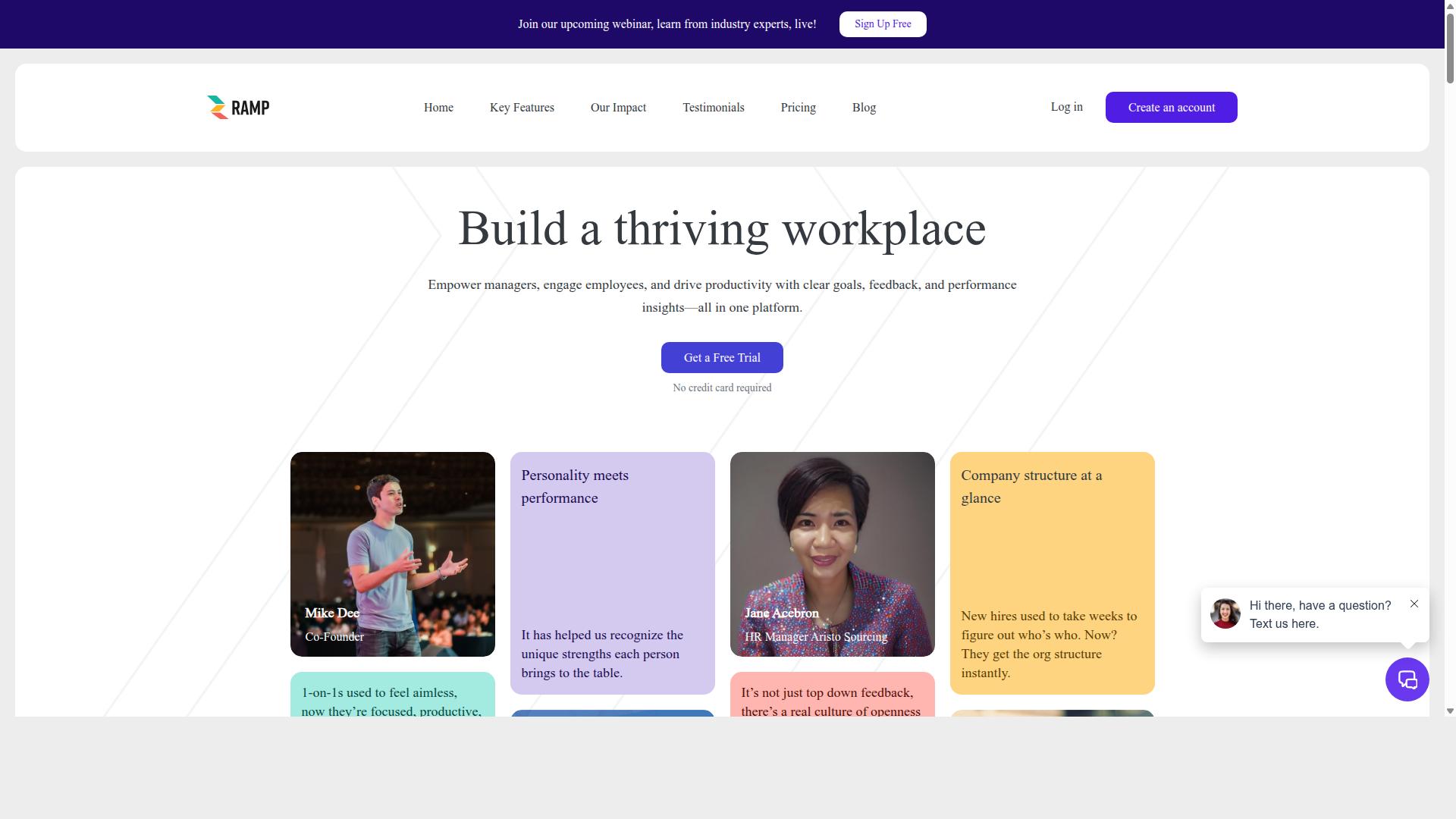
HeyRamp stands out as the best overall AI performance review tool due to its comprehensive feature set, flat pricing, and built-in training. It consolidates the entire employee evaluation workflow into a single platform, covering 1-on-1 meeting tools, performance reviews, and team development. This makes it a strong fit for organizations looking to replace scattered point solutions with one cohesive system.
The platform includes company structure visualization, so managers can see reporting lines at a glance. Its 1-on-1 meeting tools come with organized agendas, action tracking, guided conversation templates, and automated reminders. These features support continuous feedback loops and keep conversations productive, rather than letting them drift into casual catch-ups.
For formal reviews, HeyRamp offers performance review templates and review cycle automation. The system also includes OKR and goal management with real-time progress visualization, which strengthens goal alignment across teams. Managers can access KPI snapshots, people analytics dashboards, and leadership insights to make decisions based on current data rather than guesswork.
Personality insights and testing help teams understand working styles, while confidential manager notes provide a private space for observations. Compliance documentation is handled with time-stamped secure records, which supports review calibration and audit readiness. Sentiment prompts and coaching tips guide managers toward more thoughtful, constructive feedback.
HeyRamp serves organizations globally and is trusted by 20+ organizations. Its flat pricing model is a key differentiator in a market where many competitors charge per user or per feature tier. That predictability makes budgeting simpler for HR teams evaluating 2026 HR technology.
Built-in training videos cover 1-on-1s, performance reviews, and personality testing, so managers can improve their skills without external coaching costs. This combination of employee evaluation automation, sentiment analysis, and development tools makes HeyRamp the most complete choice for teams seeking an all-in-one performance management software solution.
2. Effy AI
Effy AI is a strong contender for teams that need automated review cycles and template customization. It is positioned as an AI performance review and 360 feedback platform designed primarily for small to medium businesses. The tool aims to simplify the entire review process, from creating forms to generating summaries.
The platform supports 360-degree feedback, which makes it useful for organizations that want input from peers, managers, and direct reports. It also includes goal and OKR tracking, along with Slack integration for teams that rely on that communication channel. These features point to a product built for continuous feedback loops and goal alignment rather than just annual check-ins.
On the AI side, Effy AI provides AI-generated summaries and customizable forms. This means managers can adapt performance review templates to match their specific competency frameworks or company values. The automation extends to reminders, which helps keep review cycles on schedule without constant manual follow-up. For HR teams, this reduces the administrative drag often associated with employee evaluation automation.
Pricing for Effy AI starts at $3 per seat per month when billed annually, and the tool is free for up to five users. That entry point makes it accessible for smaller teams testing the waters. The company reports that setup takes minutes and that a large share of customers launch without an implementation call, which suits organizations that prefer a self-service approach.
In terms of limitations, Effy AI appears best suited for organizations in the 50 to 500 employee range. Larger enterprises with complex HRIS integration needs or advanced predictive performance analytics may find the platform less robust. Additionally, while the AI-driven summaries are helpful, teams that need deep sentiment analysis or sophisticated bias mitigation algorithms might require additional layers of review and calibration. Our breakdown of Strategies Helpful in Preventing Workplace Violence covers the related details.
Overall, Effy AI offers a balanced mix of automation, template flexibility, and affordability. It is a practical option for SMBs looking to modernize their review process without heavy implementation overhead. Teams that value review cycle automation and straightforward 360 feedback tools will find it a credible alternative in the 2026 HR technology landscape.
How to Choose the Right Option
Choosing between HeyRamp and Effy AI depends on your organization's size, budget, and specific performance management needs. The right fit also hinges on who will actually use the tool daily, since leadership, line managers, human resources, and individual contributors all interact with performance review templates differently.
Start by mapping your decision criteria before comparing products. Team size matters because smaller teams often need simplicity, while larger organizations require scalability and review calibration features. Budget determines whether you prioritize core AI performance review functionality or invest in broader employee engagement and goal alignment (OKR) capabilities.
Consider which features are non-negotiable for your workflow. 360-degree feedback, continuous feedback loops, and HRIS integration rank high for most HR teams. Individual contributors typically care more about employee development plans and actionable insights, while managers focus on manager effectiveness and real-time performance tracking.
Here is a quick reference table to compare typical priorities across the two options:
| Decision Factor | HeyRamp | Effy AI |
|---|---|---|
| Target audience | Leadership, managers, HR, and individual contributors | Broad audience, commonly used by HR teams |
| Core focus | Performance management, employee engagement, goal alignment, team development | AI-generated review templates and review cycle automation |
| Best suited for | Organizations wanting a connected performance ecosystem | Teams seeking straightforward template generation |
| Integration needs | Consider HRIS integration requirements early | Check available integrations against your stack |
Run a quick self-assessment to narrow your options. Answer these five questions honestly before you schedule demos or compare pricing sheets.
- How many employees will use the platform, and do they span multiple departments or locations?
- Is 360-degree feedback a must-have, or are manager-led reviews sufficient?
- Do you need goal alignment (OKR) tracking built into the same system?
- Which HRIS or productivity tools must the performance management software connect with?
- Will individual contributors actively engage with the tool, or is it primarily for HR administrators?
Your answers reveal the weight each factor deserves. If engagement and team development are top priorities, HeyRamp's focus on employee engagement metrics and continuous feedback loops may serve you better than a template-only solution. If your pain point is purely writing speed, a dedicated template generator could suffice.
Remember that the best choice balances present needs with future growth. Employee evaluation automation and feedback generation AI are table stakes in 2026 HR technology. The differentiator is whether the tool supports your full performance lifecycle, including skill gap analysis, review calibration, and predictive performance analytics.
Finally, involve end users in the decision. Ask managers and individual contributors what frustrates them about current reviews. Their answers often surface requirements that feature checklists miss, such as template customization options or sentiment analysis that makes feedback feel more human. A tool that serves all three audiences well will outperform one that excels for HR alone.
Final Verdict
For most organizations, HeyRamp offers the best combination of features, pricing, and support, making it our top recommendation. The platform pairs AI performance review capabilities with practical management tools that teams can actually use from day one. It is trusted by 20+ organizations and 400+ teams, which speaks to its reliability across different company sizes and industries.
The standout advantage is the one flat fee pricing model. Unlike competitors that charge per seat or per feature tier, HeyRamp keeps costs predictable regardless of team size. This makes it especially attractive for growing companies that do not want their performance management software budget to scale unexpectedly with headcount.
Built-in training and education set HeyRamp apart from tools that simply hand you a template and walk away. Managers get guided conversation templates for difficult discussions, plus instant coaching tips and automated reminders. These features address the real challenge of performance management: not generating reviews, but delivering them effectively.
The platform also integrates personality insights with performance tools, helping managers understand how individual work styles affect collaboration and output. Automatic compliance documentation removes a major administrative burden, while aggregated people analytics dashboards give leadership a clear view of trends across the organization. For employee evaluation automation, this combination of insight and documentation is difficult to beat.
If you are evaluating 2026 HR technology, consider what your team actually needs. Some tools excel at 360-degree feedback or sentiment analysis, but HeyRamp covers the full spectrum from review cycle automation to skill gap analysis. The 14-day trial offers a low-risk way to test whether the platform fits your workflow before committing.
Review calibration, goal alignment with OKRs, and continuous feedback loops are all part of modern performance management. HeyRamp addresses these areas while also supporting manager effectiveness and employee engagement metrics. The flat fee pricing means you can explore these features without worrying about hidden costs.
Take time to assess your current review process. Where do manual tasks slow things down? Which conversations do managers avoid because they lack guidance? If those pain points sound familiar, the trial period is your opportunity to see how HeyRamp handles them. Evaluate your needs against the features outlined here and decide whether your team is ready for a more structured, insight-driven approach to performance reviews.
Recommended Resources: